
The short answer is yes.
The more honest answer is that they already do.
Product quality is not only a result of how careful the engineers are. It is also shaped by deadlines, handovers, team structure, planning decisions, release pressure, unclear ownership, and the amount of uncertainty everyone is willing to tolerate.
That does not mean management is always to blame when quality drops. It also does not mean engineers get to hide behind "management pressure" every time the codebase becomes difficult to work with.
The reality is more uncomfortable than that.
Good engineers can care deeply about quality and still ship something below their preferred standard. Not because they suddenly stopped caring, but because the business context changed the shape of the decision.
At some point, delivery pressure becomes real. A client is waiting. A product is already late. A team has inherited a project from another vendor or agency. Nobody is completely sure how much work is left, but everyone knows the deadline is getting closer.
In those moments, the question is not whether technical debt will happen.
It probably will.
The real question is whether the team has enough wisdom to decide which debt is survivable, which debt must be paid back soon, and which debt should never be accepted in the first place.
Quality is an organizational outcome
Engineers often talk about quality as if it lives only inside the codebase.
Tests. Architecture. Naming. Observability. Documentation. Deployment pipelines. Review standards.
All of those matter.
But quality also lives in the decisions around the codebase.
If a project changes hands between multiple agencies, the code does not arrive in a neutral state. It arrives with history. Different conventions. Different assumptions. Different shortcuts. Different parts that nobody fully trusts.
If management is uncertain about when the project should be completed, engineers feel that uncertainty in very practical ways. Planning becomes harder. Refactoring becomes harder to justify. Writing tests starts to feel like a luxury, even when everyone knows it is not.
If the product needs to go live quickly, the team starts making trades.
Some of those trades are reasonable. Some are dangerous. Some look small at the time and become expensive later.
That is why quality cannot be separated from management and operations. The codebase records the pressure the organization was under.
The uncomfortable part: sometimes you knowingly accept debt
I have been in that position.
I worked on a project that had already passed through multiple agencies before I got involved. By the time I joined, there was pressure from every direction. The product needed to move. There was uncertainty around completion. Some areas of the system already carried decisions made by people who were no longer there.
As the technical lead, I still cared about the quality bar.
But caring about the quality bar did not remove the constraints.
There were places where I accepted things I would normally push harder against: missing tests, code that was not as clean as I wanted, areas that needed more time than the schedule seemed willing to give.
At the time, those compromises felt like the price of delivery.
Later, when the product was live and new features needed to be introduced, the cost became more visible. Coming back into those parts of the system was harder. Work that should have been straightforward needed more caution. The team had to spend more energy understanding previous shortcuts before it could safely build on top of them.
That is one of the frustrating truths about technical debt.
It rarely feels expensive on the day you take it.
It becomes expensive when the next important feature arrives.
Management may be aware, but not at the same depth
In many projects, management is aware that tradeoffs are being made.
But awareness is not the same as technical understanding.
A manager may understand that "we are skipping some tests" or "we will clean this up later." That is not the same as understanding the specific future cost:
- slower feature delivery
- more fragile releases
- harder onboarding
- less confidence during refactors
- more time spent reading unclear code
- more risk around production changes
The technical lead often carries that detail alone.
That gap can become frustrating. Not because management is acting in bad faith, but because the full weight of the tradeoff is not evenly distributed. Engineering feels the compounding cost first. Engineering also tends to absorb the blame when the cost finally becomes visible.
This is why technical debt should not be treated as an engineering secret.
If debt is taken for delivery reasons, it should be named as a product and management decision too.
Not dramatically. Not defensively. Just clearly.
The conversation should sound something like:
We can ship faster by accepting this compromise, but it means future work in this area will be slower until we schedule time to clean it up.
That sentence matters because it turns invisible engineering pain into an explicit business tradeoff.
Not all debt is equal
One mistake teams make is treating all technical debt as equally bad.
It is not.
There is a big difference between temporary pipeline imperfection and code that violates the basic standards of the codebase.
For example, in Azure DevOps, if the stack is complicated and delivery pressure is high, it may be reasonable to temporarily put Azure directives directly in pipelines instead of taking the extra time to design a cleaner release pipeline.
That is debt, but it is relatively contained.
The same applies to automation scripts. Maybe a CLI script is slower than it should be. Maybe caching in the pipeline would improve execution speed, but getting it right is more complicated than expected. It can be reasonable to stop at "good enough for now" and come back later.
Those are practical compromises.
They should be tracked, but they do not necessarily damage the core of the product.
The more dangerous debt is different.
Messy code. Spaghetti flows. Code that ignores the basic standards already established in the codebase. Business logic scattered across places where nobody expects it. Functions that are hard to test because they do too many things. Naming that hides intent. Changes that make every future change more risky.
That kind of debt compounds quickly.
It does not stay in one corner. It becomes the style other people copy. It lowers the bar silently. It teaches the next developer that this is the acceptable shape of work here.
That is the line senior engineers need to defend.
The senior engineering skill is judgment
It is easy to say, "Never compromise on quality."
It sounds principled. It is also not how real software always gets built.
There are deadlines. There are contracts. There are clients. There are market windows. There are cash-flow realities. There are projects where the first responsible move is to stabilize and ship, then improve.
But the opposite view is just as dangerous:
We will clean it up later.
That sentence has ruined many codebases.
The senior engineering skill is knowing how far the line can move without losing the integrity of the system.
Some debt is acceptable because it is isolated, visible, and easy to repay.
Some debt is dangerous because it changes the structure of the system.
Some debt should be refused because it creates a risk the business does not actually understand.
The job is not to be the person who says no to everything. The job is to make the tradeoff legible.
Technical debt needs a repayment plan
If management accepts faster delivery by taking technical debt, management should also accept that time must be set aside to address it.
That is the mature version of the trade.
Debt without a repayment plan is not strategy. It is just deferred pain.
Teams need a way to capture the debt while the context is still fresh:
- what was compromised
- why it was accepted
- what risk it creates
- what future work it may slow down
- what "paid back" would look like
- when it should be revisited
This does not need to become a heavy process. A few well-written tickets can be enough. A short technical debt section in the project board can be enough. A recurring engineering cleanup window can be enough.
What matters is that the debt remains visible after the release.
Because once the product is live, new features will arrive. They always do. If no time is reserved to improve the foundation, the team ends up building new work on top of old compromises until every change feels heavier than it should.
What I would almost never compromise
I can accept incomplete pipeline optimization for a while.
I can accept automation scripts that are not yet as fast as they could be.
I can accept missing tests in a narrow area if the risk is known, the deadline is real, and the team commits to coming back.
What I would push hard against is messy code that ignores the basic standards of the codebase.
Not because I care about style for its own sake.
Because code style, structure, naming, and boundaries are how a team communicates with its future self.
When those break down, every future decision becomes more expensive. Review becomes harder. Testing becomes harder. Refactoring becomes scarier. New engineers inherit confusion instead of intent.
That is not just an engineering preference. It is a product risk.
The conversation should change
The healthier conversation is not:
Management wants speed, engineering wants quality.
That framing is too simple.
The better conversation is:
What level of quality does this product need right now, what are we choosing to defer, and when will we pay back the debt we are accepting?
That question respects both realities.
It respects that delivery matters.
It also respects that quality is not free, and that the cost of poor quality does not disappear just because the release date is close.
Experienced engineers need to be able to explain this without sounding dramatic. Management teams need to be willing to hear it without treating every quality concern as resistance to delivery.
When that happens, technical debt becomes a conscious tradeoff instead of an accident.
Closing thought
Management decisions absolutely affect product quality.
The deadline affects it. The handover affects it. The team structure affects it. The release plan affects it. The willingness to schedule cleanup affects it.
But engineering still has responsibility.
Our job is to know where compromise is acceptable, where it is dangerous, and where it crosses a line the product will pay for later.
Wisdom is not refusing every shortcut.
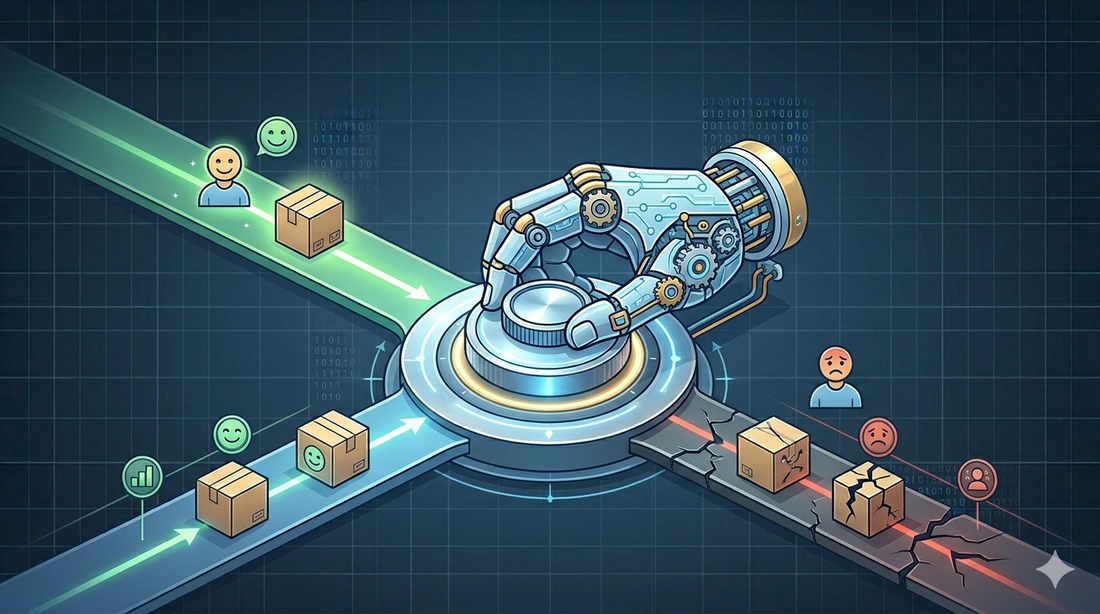
Wisdom is knowing which shortcuts are temporary roads, and which ones are cracks in the foundation.
Ciao 👋
Discussion